DROP CTRL Mechanical Keyboard Tenkeyless TKL 87 Key Hot-Swap (Barebones, Black) Review (2026)
Updated September 14, 2026 · Research-based review
Our verdict
Drop's CTRL barebones is a black 87-key hot-swap TKL chassis for builders who already own switches and keycaps and want a solid aluminum frame with per-key RGB. It is not usable out of the box, and staying wired only, which limits it against newer wireless hot-swap boards.
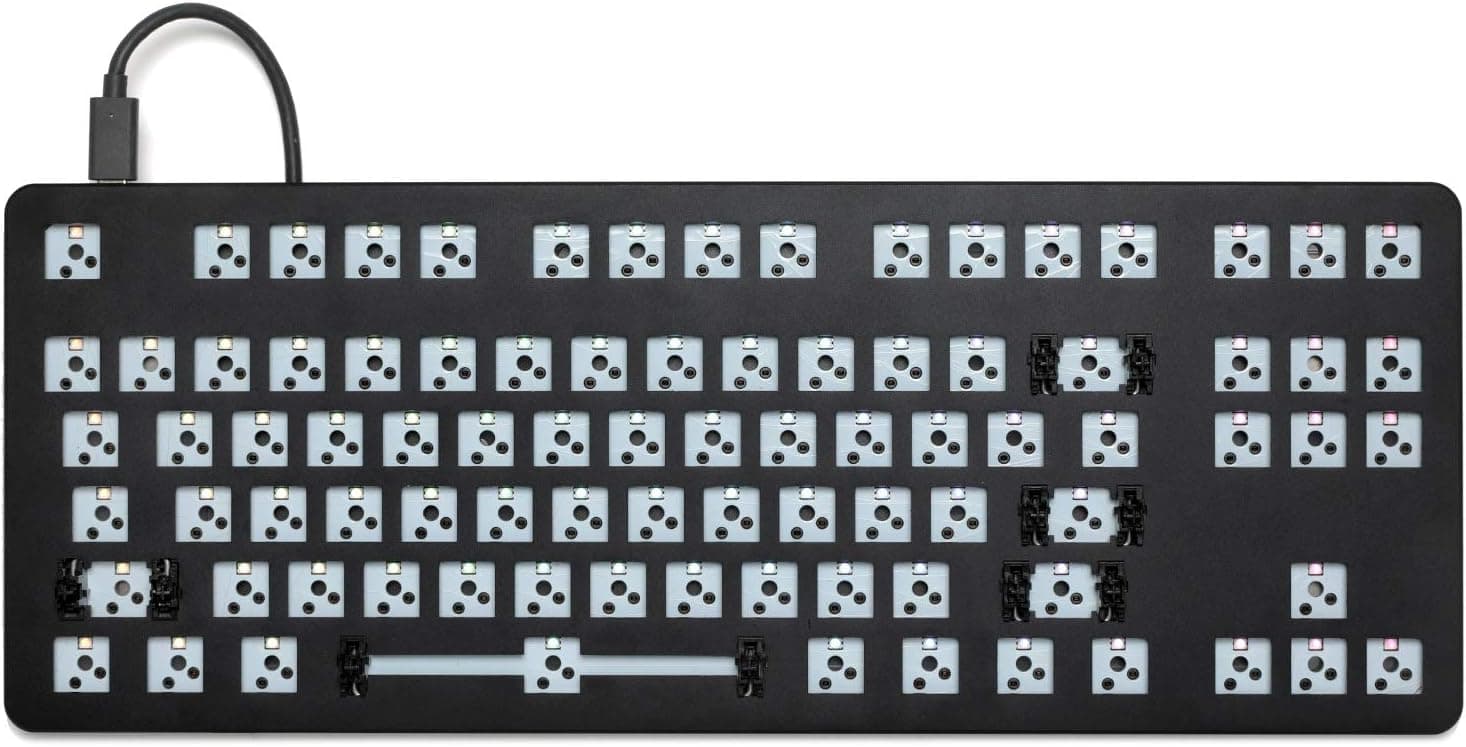
Drop's CTRL barebones is a black 87-key tenkeyless hot-swap chassis, meant for builders who already own switches and keycaps.
Price range: See on Amazon
What we liked
- + Barebones format avoids paying for stock switches you plan to replace anyway
- + Hot-swap sockets make it quick to assemble and change switches later
- + Tenkeyless frame gives a full navigation cluster in a narrower footprint
Trade-offs
- - Not usable out of the box, since switches and keycaps are sold separately
- - Wired only, so it lacks the Bluetooth convenience of many newer boards
Who the CTRL barebones fits
This is a builder's keyboard, not a plug and play one, aimed at people who already own or plan to buy their own mechanical switches and keycaps separately. The barebones format means no stock switches are included, which suits enthusiasts who do not want to pay for switches they intend to remove anyway. It fits anyone who wants a tenkeyless layout with a solid aluminum frame and full RGB customization, and who is comfortable using QMK-based software to program macros and lighting rather than relying on a simple plug-and-play driver. It is a poor fit for anyone who wants to type on the keyboard the day it arrives, since assembly is a required first step.
Frame, hot-swap and connection specs
The CTRL uses a solid aluminum frame with a built-in switch plate and magnetic legs for adjustable typing angle, measuring about 14.5 by 5.5 by 1.4 inches and weighing around 34 ounces as a barebones unit. Hot-swap sockets accept plate-mounted Cherry-style switches without any soldering, and the board supports plate-mounted stabilizers, both sold separately from this barebones listing. Backlighting includes both per-key RGB and under-case RGB lighting, fully customizable through Drop's software. The board connects over dual USB-C ports and is fully programmable through QMK firmware, letting owners remap keys or record macros on any key on the board.
Building and living with the CTRL
Getting the CTRL running requires seating a compatible set of plate-mounted switches into the hot-swap sockets, a process that takes a few minutes per key and needs no soldering iron. Once assembled, the magnetic adjustable legs let the typing angle change without unscrewing anything, a detail Drop carried over from feedback in its keyboard community. Because it is wired only, there is no pairing step or battery to manage, and the dual USB-C ports give some flexibility in cable routing depending on desk setup. QMK programming takes a bit more setup time than simpler keyboard software, but it unlocks full per-key remapping and macro recording once configured.
Trade-offs against other TKL boards
Against the OOCTPK Chilkey ND TKL, which leads this TKL guide with a similarly hot-swappable aluminum build but adds wireless connectivity, the CTRL gives up wireless convenience while keeping a comparable build quality reputation. The Keychron K8 in either switch color offers a much simpler out-of-box experience with pre-installed switches and Bluetooth, at the cost of the CTRL's more premium aluminum frame and full QMK programmability. The Das Keyboard 4C TKL splits the difference with pre-installed Cherry MX Brown switches and a metal frame, but without the hot-swap flexibility the CTRL offers for builders who want to experiment with different switches over time.
Verdict and who should pick something else
Choose the CTRL barebones if a custom TKL build is the goal and switches and keycaps are already sourced or budgeted separately, since the aluminum frame, hot-swap sockets, and QMK programmability reward that kind of project. Skip it if the plan is to type on day one without extra shopping, where a pre-assembled board like the Keychron K8 or Das Keyboard 4C makes far more sense. Anyone who specifically wants wireless connectivity in a similarly premium hot-swap TKL frame should look at the Chilkey ND TKL instead, since the CTRL stays wired only.
Frequently asked questions
Does the CTRL barebones come with switches?
No, this is a barebones listing, so switches and keycaps must be purchased separately and installed before the keyboard can be used.
Is the CTRL hot-swappable?
Yes, it uses hot-swap sockets for plate-mounted Cherry-style switches, so no soldering is needed to install or change switches.
Does the CTRL connect wirelessly?
No, it is wired only, connecting over dual USB-C ports.
Can the CTRL be programmed with custom macros?
Yes, it runs QMK firmware, which supports full key remapping and macro programming on any key.
Prices change often, so check the current price and availability on Amazon.
Check price on AmazonMechKeeb Lab may earn a commission from the link above.