Stabilizer Tuning
Published How we research
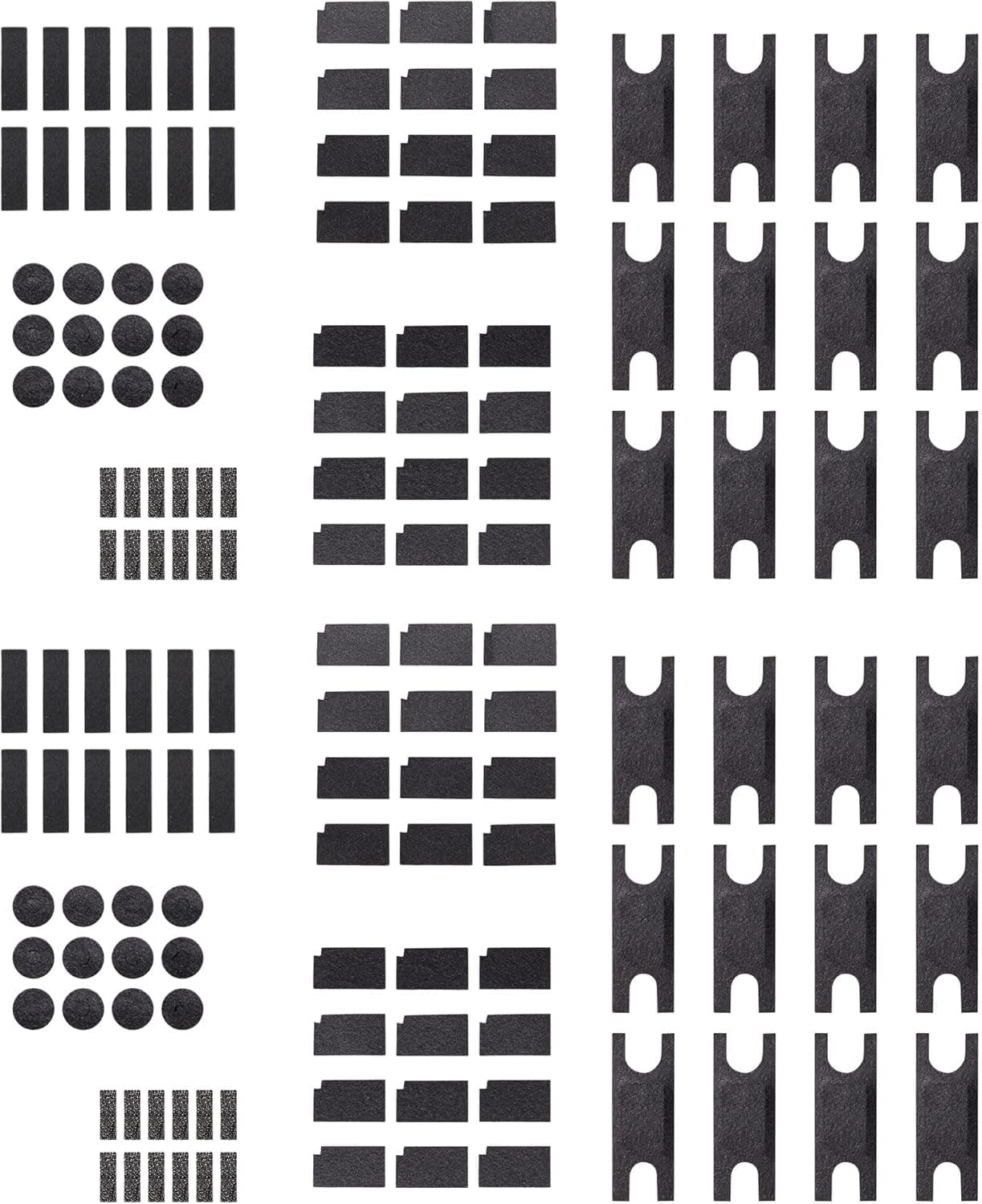
Rattle on the spacebar, shift, enter, and backspace almost always means untuned stabilizers. Tune them before mounting keycaps: lube the wire ends and the inside of the housings generously with a thick lubricant to kill the metallic rattle, clip the small feet off PCB-mount housings so they sit flush and stop ticking on bottom-out, and add the band-aid mod (a soft pad where the wire bottoms out on the board). Together these turn a rattly spacebar into one that thocks. Stabilizers, often shortened to stabs, are the mechanisms under your longer keys such as the spacebar, shift keys, enter, and backspace. They keep those wide keycaps level so the key goes down evenly no matter where you press. When stabilizers are untuned they rattle and tick, and that noise is usually the harshest, least pleasant sound on an otherwise nice board.
Products from this article
The highest-scoring picks from the buying guides this article links to. Scores are our editorial assessment, not customer ratings.
+ Band-aid mod reduces wire noise and stabilizer wobble
From our guide: Best Band-Aid Mod Kits (2026)
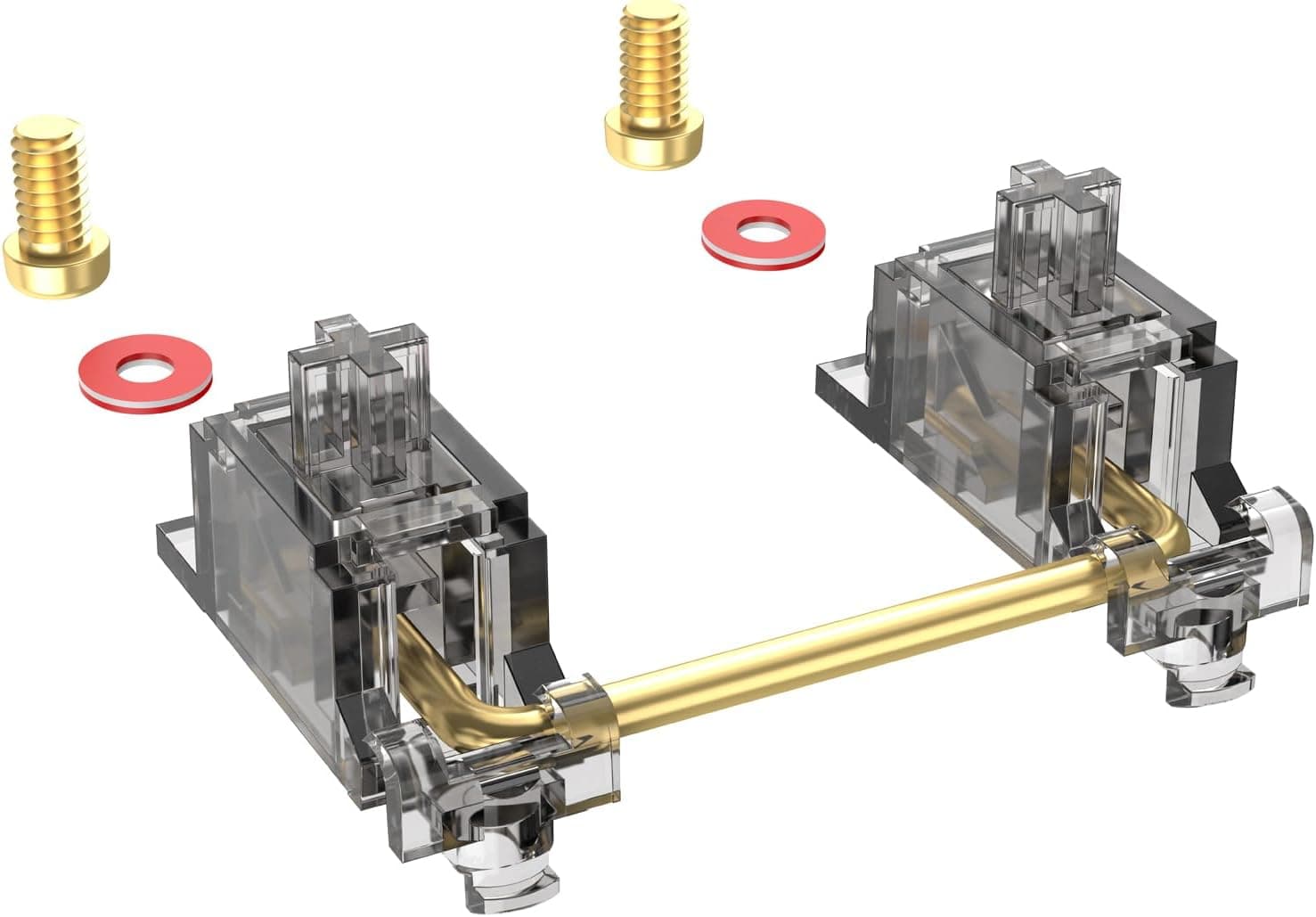
+ Included 6.25u and 7u wires support different spacebar sizes
From our guide: Best Keyboard Stabilizers (2026)
+ Poron pads sit between the stabilizer and PCB, and the listing says Poron gives a softer sound than Teflon.
From our guide: Best Band-Aid Mod Kits (2026)
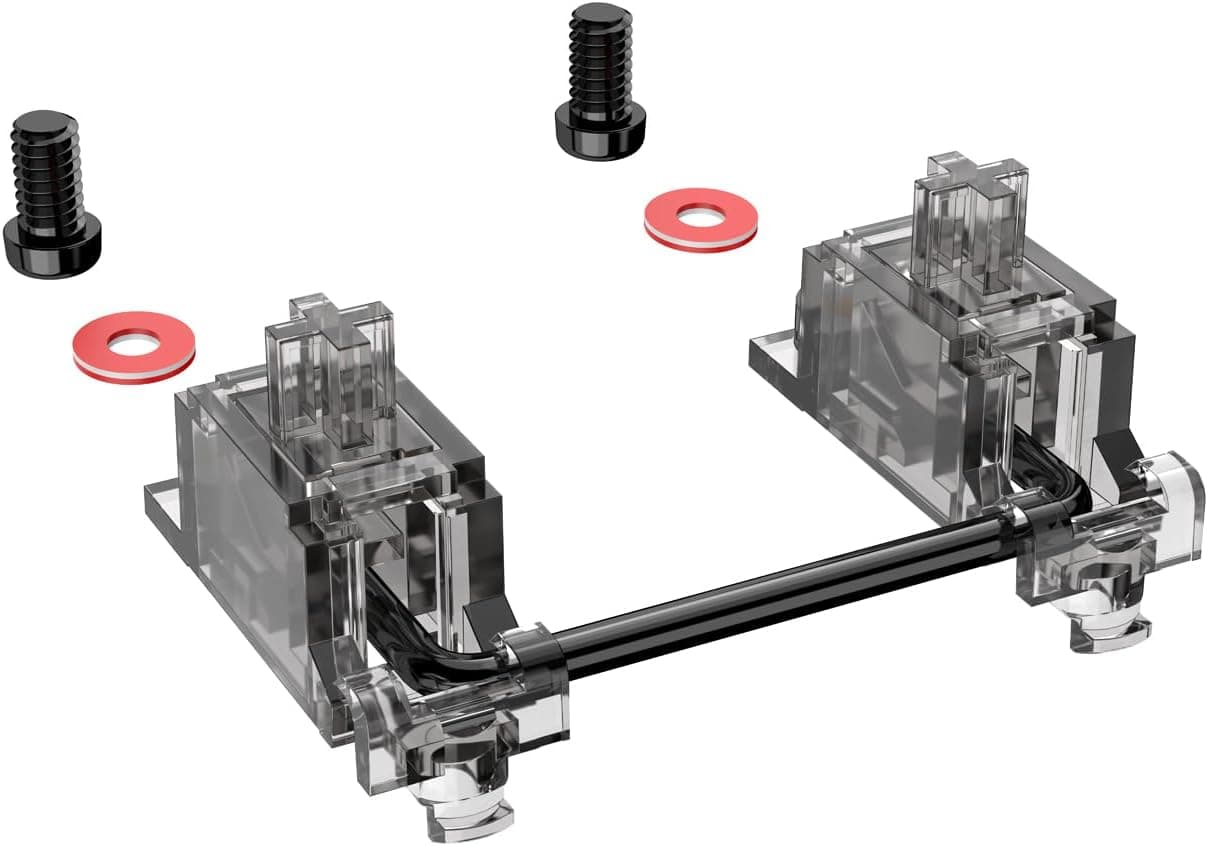
+ Smokey Black housings blend into dark themed builds
From our guide: Best Keyboard Stabilizers (2026)

What stabilizers do and where the noise comes from
The most common style is the plate mount or PCB mount wire stabilizer, where a metal wire links two housings so both ends of a long key move together. Rattle comes from the wire slapping inside the housings and from the housing ends ticking against the board. Tuning targets both of those noise sources with a few simple steps.
Lubing is the first and biggest fix
Lubing is the first and biggest fix. A thick lubricant applied to the wire ends and the inside of the housings where the wire contacts them dampens the metallic rattle dramatically. Many people also add a small amount where the stem of the stabilizer meets the housing to smooth the up and down motion. Careful, generous lubing here matters more than it does on switches.
Clipping the housing feet
Clipping addresses stabilizers whose housing feet have small protrusions on the underside. Trimming those feet flat with flush cutters lets the housing sit flush and removes a distinct high pitched tick on bottom out. Work slowly and cut only the intended feet, since over trimming cannot be undone.
The band-aid mod
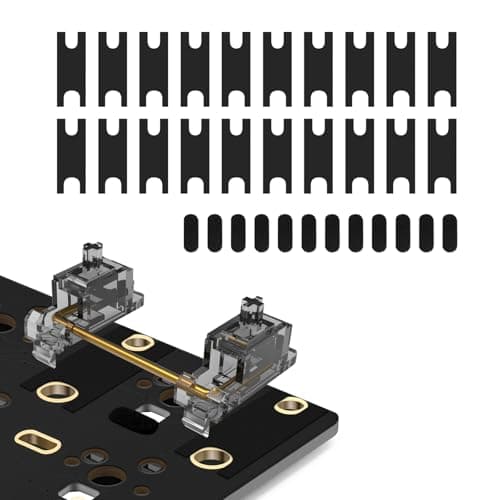
The band-aid mod places a small piece of soft material under each stabilizer where it meets the board, cushioning the point where the wire bottoms out. Combined with lubing and clipping, it produces a spacebar that thocks rather than rattles. Tune your stabs before mounting keycaps, test each long key, and you will remove the single most common complaint people have about how their board sounds.
Frequently asked questions
Why does my spacebar rattle? Untuned stabilizers: the metal wire slaps inside the housings and the housing ends tick against the board. Lubing, clipping, and the band-aid mod address all three noise sources.
What is the most important stabilizer mod? Lubing. A thick lubricant on the wire ends and inside the housings where the wire contacts them dampens the metallic rattle dramatically, and it matters more here than on switches.
What is the band-aid mod? A small piece of soft material placed under each stabilizer where it meets the board, cushioning the point where the wire bottoms out. Combined with lubing and clipping it produces a spacebar that thocks rather than rattles.
Should I tune stabilizers before or after installing keycaps? Before. Tune the stabs, then test each long key, then mount the keycaps, so you are not pulling caps back off to fix a rattle.
Popular right now
- What Is a Hot-Swap Keyboard and Why It MattersArticle
- Best Ortholinear Keyboards (2026)Buying guide
- North vs South Facing SwitchesArticle
- What Are QMK and VIA? Keyboard Firmware ExplainedArticle
- Linear vs Tactile vs ClickyArticle
- Mechanical Keyboard Switch ChartArticle
Based on the last 28 days of search and visitor data.